
As Beijing stresses human capital to underpin its drive for scientific and technological self‑reliance, observers say policies to expand, retain and upgrade talent pools will be critical amid international tensions and rising R&D investment.
As Beijing stresses human capital to underpin its drive for scientific and technological self‑reliance, observers say policies to expand, retain and upgrade talent pools will be critical amid international tensions and rising R&D investment.
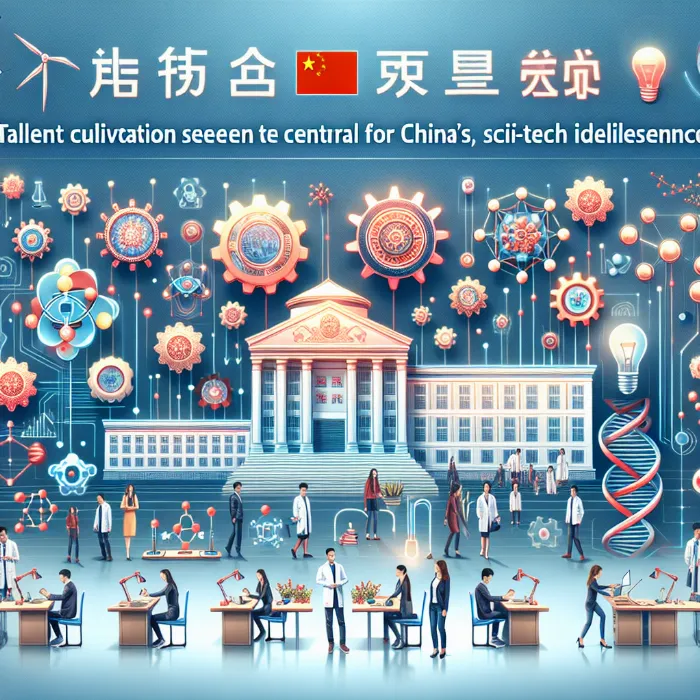
China’s recent policy emphasis on nurturing scientific and technological talent has become a centerpiece of its strategy to achieve self‑reliance in advanced technologies. In the face of international trade frictions, export controls on key hardware and software components, and intensified global competition for skilled personnel, Chinese policymakers are prioritizing talent cultivation as the essential input that will underwrite progress in semiconductors, artificial intelligence, biotechnology and other strategic sectors.
The logic behind the push is straightforward: technological capability depends on people. Government officials have framed talent as a strategic resource, not merely a workforce concern. President Xi Jinping has repeatedly stressed the importance of people in national development, encapsulated in a phrase widely cited in official discourse: "talent is the first resource" (Xinhua).
That emphasis has sharpened amid heightened geopolitical tensions that have affected access to advanced chips, equipment and design tools. Restrictions on exports of certain high‑end semiconductors, lithography tools and AI accelerators — coupled with measures by foreign governments to limit talent flows and collaborative research in areas deemed sensitive — have underscored the extent to which scientific progress also depends on secure and locally sustained human capital.
Chinese authorities have deployed multiple policy instruments to expand and upgrade talent pools. These include:
These instruments are reflected across central and provincial policy statements, five‑year plans and sector roadmaps. The 14th Five‑Year Plan (2021–2025) explicitly prioritized innovation, human capital development and the expansion of research capacity as pillars of China’s medium‑term strategy (State Council).
China’s investment in research and development has grown rapidly over the past two decades. While precise year‑to‑year figures vary by data source, official statistics show sustained increases in R&D spending as a share of GDP and in the number of full‑time equivalent researchers.
While aggregate investment and outputs have risen, policymakers and analysts stress that targeted improvements in talent quality — especially in foundational research and in fields that combine deep science and engineering — will be decisive for technological autonomy.
Analysts argue that talent cultivation must be multifaceted, addressing education quality, research ecosystems, incentive structures and openness to global exchange.
Mariana Mazzucato, a scholar of innovation policy, has advocated for mission‑oriented approaches where states mobilize scientific talent alongside public investment to steer technological breakthroughs. In her work she argues that mission‑driven public intervention can help coordinate resources and skills toward complex societal challenges (Project Syndicate).
Chinese officials and research administrators emphasize the long‑term nature of talent development. A Ministry of Science and Technology spokesperson told state media that talent pipelines require sustained support across stages — from undergraduate education to postdoctoral fellowships and industry placements — to build capabilities that withstand external pressure (Ministry of Science and Technology).
Internationally, observers note that while rapid increases in the number of graduates and researchers can supply capacity for many applications, breakthroughs in frontier domains typically stem from deep, long‑term investment in basic research and an ecosystem that rewards risk‑taking and international collaboration. The World Bank and OECD have documented that combinations of research funding, quality universities, and flexible labor markets are associated with sustained innovation performance (World Bank, OECD).
Several structural challenges complicate the path from larger talent pools to genuine self‑reliance in cutting‑edge technologies.
Beijing’s talent policies are not generic; they prioritize certain sectors deemed strategic for national development and security. Notable areas of concentrated effort include:
Sectoral strategies often combine state funding for priority research, incentives for firms to hire top graduates, and national labs or research institutes with mission‑oriented mandates.
Provincial governments and municipal authorities have launched localized talent initiatives that complement national programs. Cities with major research universities and high‑tech clusters — including Beijing, Shanghai, Shenzhen and others — have developed their own packages to attract researchers and entrepreneurs. These local programs sometimes offer more flexible or generous incentives than national schemes, producing a competitive marketplace for skills within China.
At the same time, international academic exchange remains an important avenue for skills transfer. Even as certain collaborations become sensitive or restricted, many Chinese universities and firms continue to engage in global research networks that provide exposure to frontier methods and ideas. Balancing international engagement with domestic capacity building is a recurrent theme in policy debates.
Determining whether talent‑centric policies are delivering greater self‑reliance requires tracking a set of intermediate and long‑term indicators. Key metrics include:
Observers note that some of these outcomes will take many years to materialize, especially those tied to foundational research. Immediate gains may be more visible in applied fields and sectors that can absorb large numbers of trained engineers.
Pursuing talent self‑sufficiency involves trade‑offs. Greater inward focus can reduce vulnerability to external shocks but may also limit the benefits of cross‑border scientific exchange. Policymakers must weigh the short‑term need to shore up supply chains against the long‑term advantages of openness that historically powered scientific discovery and diffusion.
As Mariana Mazzucato and other analysts have argued, mission‑oriented public policy can mobilize talent and resources for complex challenges, but it must be combined with institutional mechanisms that sustain creativity, transparency and international engagement where feasible (Project Syndicate).
China’s emphasis on talent cultivation reflects a broader recognition that technology policy ultimately depends on people. There is broad consensus among policymakers, academic observers and international organizations that building, retaining and effectively deploying human capital will be decisive for national technological trajectories.
Success will depend not only on volume — more graduates, more labs — but on quality, institutional incentives and the ability to sustain long‑term investments in basic research and high‑risk projects. Whether these efforts translate into greater self‑reliance in the hardest, most sensitive technological domains will play out over the coming decade and will be shaped by domestic reforms and the evolving international environment.
China’s drive to cultivate talent is a central pillar of its strategy for scientific and technological self‑reliance. The approach combines expanded education, selective incentives for returnees and young researchers, and local experimentation, all set against a backdrop of rising R&D investment and intensifying international competition. While numbers and programs have grown quickly, translating larger talent pools into sustained global leadership in frontier technologies will require deeper reforms in research incentives, greater emphasis on basic science, and careful management of international links. The outcome will influence not only China’s technological trajectory but also the global landscape of innovation.
Disclaimer: This article is based on publicly available information and does not represent investment or legal advice.
Like
Dislike
Love
Angry
Sad
Funny
Wow



California Bar Introduces Privacy Law Specialization to Meet Digital Era Demands
June 22, 2025

Collagen Supplements Boom: Do They Really Improve Skin and Hair Health?
March 15, 2025
Twitter Rolls Out New Feature Allowing Users to Tip Influencers Directly
April 08, 2025







Comments 0