As China pushes for technological self-reliance, policymakers and institutions are emphasizing talent development as the linchpin of long-term capacity. This article examines the context, measures, challenges and implications of prioritizing human capital in national science and technology strategy.
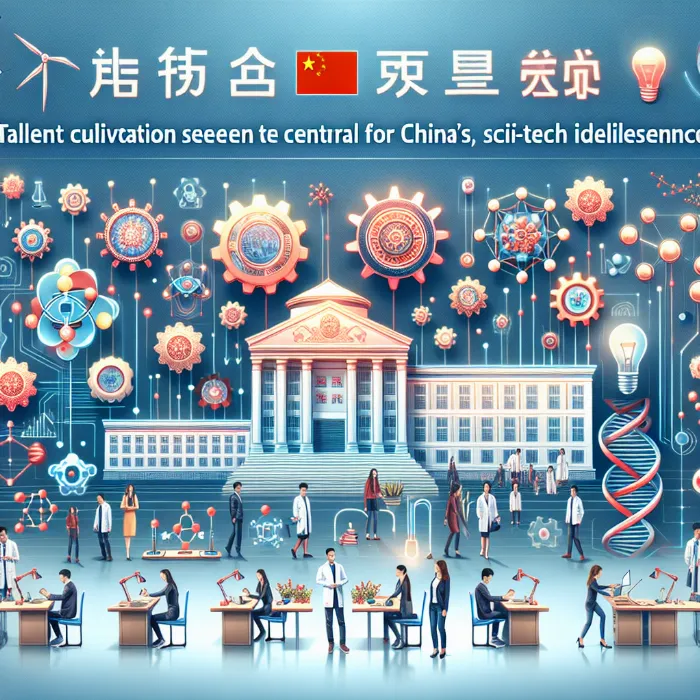
Talent cultivation key to self-reliance in sci-tech
Beijing — As Beijing intensifies efforts to reduce strategic dependence on foreign technologies, authorities and analysts increasingly identify talent development as the pivotal element for sustained self-reliance in science and technology. The move follows years of policy recalibration that have shifted emphasis from chasing immediate product-level independence to building deeper capabilities in people, institutions and research ecosystems.
Why talent matters
Experts define "talent" in this context broadly: researchers and engineers, educators, managers capable of running complex R&D programs, and entrepreneurs who can commercialize laboratory breakthroughs. Unlike one-off investments in factories or equipment, human capital underpins the adaptability that science-driven economies need to withstand external shocks, such as export controls or sudden interruptions in supply chains.
China's leadership has repeatedly framed the argument. The Communist Party's official rhetoric links technological self-reliance to the cultivation of human resources and institutional reform. As a central government policy document put it, "talent is the primary resource, science and technology are the primary productive forces, and innovation is the primary driver of development." The slogan has appeared in multiple policy statements and speeches by senior leaders and is central to the country's long-term planning for science, technology and talent development (State Council, 14th Five-Year Plan).
Background and policy context
The push for self-reliance accelerated after a series of external pressures on China's technology sector, including trade frictions and export controls affecting high-end semiconductors and related equipment. Beijing's response included accelerating domestic R&D investment, reshaping industrial policy, and expanding human capital programs to produce and attract specialists in critical fields.
Key milestones and frameworks include:
- National Five-Year Plans and sectoral strategies emphasizing innovation-driven growth and self-reliance (14th Five-Year Plan for Science and Technology).
- Large-scale talent initiatives and funding vehicles, including national talent programs, scholarships, returnee incentives, and support for elite research teams and state laboratories.
- Increased R&D spending: China’s total gross domestic expenditure on R&D (GERD) has risen steadily over two decades, with estimates placing R&D intensity in the range of approximately 2.4% to 2.6% of GDP in recent years, approaching levels seen in many advanced economies (World Bank: R&D expenditure; UNESCO Science Report).
Numbers and capacity: education and research output
China has dramatically expanded its higher education system and research base. The number of university graduates has grown into the millions annually, and the country now ranks among the top producers of STEM graduates globally. China also accounts for a large share of global scientific publications and patent filings, indicators of increased research activity and innovation output.
Selected indicators:
- Higher education expansion: China now produces several million tertiary graduates annually, with a significant fraction in engineering, computer science and related fields (Ministry of Education statistics; government annual reports).
- Publication and patent output: China has been among the top countries by number of scientific publications and patent applications over the last decade, reflecting scale in research activity (Nature commentary on China’s research surge).
- R&D spending: sustained increases in GERD have accompanied talent programs and institutional investments (World Bank R&D statistics).
Policy instruments for talent cultivation
Chinese policy combines supply-side measures (education, scholarships, university funding) with demand-side incentives (state laboratory placements, industry partnerships, entrepreneurial funding). Major instruments include:
- National talent projects: a spectrum of programs—from large-scale initiatives to high-level talent support plans—aim to retain and attract leading researchers and managers for strategic sectors.
- University and domestic research funding: increased allocations to key universities and national laboratories to support long-term basic research and applied projects.
- Returnee and diaspora engagement: financial incentives, housing and research start-up funds attract overseas-trained researchers to return to China or collaborate remotely.
- Industry–academia partnerships: programs that blur institutional boundaries encourage codified collaboration between firms and universities to move research toward application.
- Education reforms: efforts to stress critical thinking, interdisciplinary training and industry-relevant skills at universities and graduate programs.
Government-issued blueprints also call for reforms to academic evaluation systems, addressing longstanding complaints that publication and grant metrics can disincentivize long-term, high-risk research. Reforms aim to reward innovation relevance and team-building as much as individual output.
Voices from policy and research
Government bodies and institutions stress the urgency of matching talent development to strategic goals. A Ministry of Science and Technology statement highlighted the need to "strengthen the training base for basic research and speed up the construction of a high-level talent system," linking personnel policy to technological independence (Ministry of Science and Technology).
International organizations and analysts largely see the pivot toward talent as pragmatic. The UNESCO Science Report notes that sustained investment in people and institutions is essential for countries seeking technological upgrading and long-term resilience (UNESCO Science Report).
"The development of capabilities ultimately depends less on a single breakthrough and more on the steady accumulation of skilled personnel and institutional know‑how," an international policy analysis concluded, emphasizing the long time horizon required for building deep competence (World Bank: Human capital and innovation).
Sectoral priorities and talent needs
Certain sectors are especially dependent on high-end talent and remain focal points of policy:
- Semiconductors and advanced manufacturing — require specialized materials scientists, lithography experts and systems engineers.
- Artificial intelligence and data science — need mathematicians, algorithm developers, and engineers with experience in large-scale systems and chips optimized for AI workloads.
- Biotechnology and pharmaceuticals — require cross-disciplinary teams combining molecular biologists, bioinformaticians, regulatory experts and clinical researchers.
- Quantum information sciences — depend on physicists and engineers who can bridge laboratory physics and practical device engineering.
Each field presents distinct training challenges. For example, semiconductor design and fabrication demand long apprenticeships and access to specialized equipment; quantum engineering requires rare interdisciplinary skill sets that straddle physics and electrical engineering.
Challenges and constraints
Despite scale and focused policy, several structural challenges complicate talent-based strategies for technological self-reliance:
- Quality versus quantity: Rapid expansion in graduate education produces many degree-holders, but questions remain about the depth of training and research experience for a subset of graduates.
- Mismatch with industrial demand: Graduates' skills sometimes misalign with firms' needs, particularly in advanced manufacturing and systems engineering.
- Global mobility and geopolitics: Restrictions on international collaboration and higher scrutiny of cross-border talent programs in some countries complicate flows of researchers and ideas.
- Innovation ecosystem maturity: Talent is necessary but not sufficient; functioning venture capital markets, IP frameworks, and regulations also determine whether discoveries translate into domestic capacities.
- Academic incentives and integrity: Overemphasis on narrow metrics may discourage risk-taking and long-term projects; concerns about research integrity and reproducibility persist across large research systems.
These constraints have practical implications for sectors such as semiconductors where hardware ecosystems span equipment makers, materials suppliers and design houses. Talent can accelerate domestic advancement, but supply chains and capital goods gaps remain significant.
International collaboration vs. self-reliance
The drive for self-reliance does not imply decoupling from global science. Beijing continues to participate in international research networks and to send students, albeit with a sharpened focus on strategic areas. Analysts emphasize that a balanced approach—using global collaboration to accelerate capability-building while protecting critical areas—has become the norm.
International bodies have noted the mutual benefits of global scientific engagement. At the same time, governments around the world have increased scrutiny of certain research collaborations and talent programs, especially where dual-use technologies are concerned.
Case studies: institutional responses
Several illustrative examples show how institutions are translating policy into practice:
- University–industry consortia: Several top-tier Chinese universities have established joint research centers with major firms to train students on real-world challenges and to align curricula with industry needs.
- State laboratories and national research centers: These centers concentrate funding and talent on priority problems, offering long-term appointments and large-scale projects that can sustain teams through multi-year research cycles.
- Startup incubators and talent subsidies: Local governments and provinces use grants, housing subsidies and tax incentives to attract returning researchers and entrepreneurs to set up startups in strategic clusters.
Indicators to watch
Observers tracking the success of talent-focused strategies look at both quantitative and qualitative indicators:
- R&D intensity (GERD as a share of GDP) and its composition (basic vs. applied research).
- Numbers and international experience of high-level researchers recruited or retained.
- Quality-adjusted research outputs (citation impact, high-level patents, commercialization rates).
- Employment and wage data in strategic sectors that could signal improved absorptive capacity.
- Metrics of international collaboration balanced against domestic capability gains.
Expert perspectives
Policy analysts emphasize the long-term nature of building talent ecosystems. The UNESCO Science Report reviews global cases in which sustained investment in human capital underpinned later technological upgrading (UNESCO Science Report).
A World Bank analysis on education and innovation argues that the combination of broad tertiary education expansion with targeted elite training programs and active industry-linkage mechanisms is often the most effective route to boosting technological capacity (World Bank: Education and innovation).
Implications for global technology competition
The emphasis on talent cultivation reframes competition in less zero-sum terms. While access to key components and equipment remains contested, human capital creates a buffer: skilled teams can redesign architectures, adopt alternative technologies, and develop indigenous substitutes over time.
For external partners and competitors, the implication is that short-term restrictions may slow but not permanently prevent capability growth if the targeted country can mobilize educational and institutional resources to develop local expertise. Conversely, countries seeking to maintain technological advantage will likely invest more in their own talent pipelines and screening mechanisms.
Conclusion
China's turn toward talent-centered strategies in its pursuit of science and technology self-reliance reflects an acknowledgement that people and institutions, not just capital and equipment, determine long-term competitiveness. The country’s scale in higher education, rising R&D investment and targeted talent programs give it a structural advantage in building capacity over time. But challenges remain: aligning education with industrial needs, reforming academic incentives, and sustaining open yet secure pathways for international collaboration.
The success of the strategy will depend on sustained commitment to deep training, long-term funding for basic research, and the maturation of ecosystems that can translate knowledge into robust industrial capabilities. Observers and policymakers will be watching indicators of research quality, the mobility and retention of top-tier talent, and the pace at which strategic sectors build end-to-end competence.
Disclaimer: This article is based on publicly available information and does not represent investment or legal advice.















Comments 0