Introduction
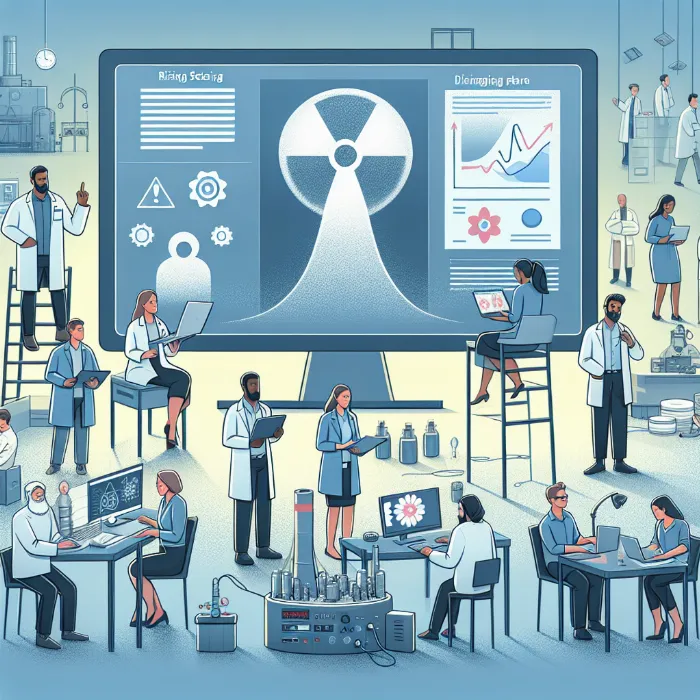
As governments and industry actors reassess the role of nuclear power in decarbonization strategies, international organisations are drawing attention to a parallel challenge: building and sustaining a skilled workforce capable of designing, licensing, operating and decommissioning today’s and tomorrow’s nuclear facilities. The Nuclear Energy Agency (NEA), an intergovernmental agency within the Organisation for Economic Co-operation and Development (OECD), is among the bodies working to "empower rising stars" in nuclear science and technology through convening, research, guidance and education-related activity.
Background and mandate of the NEA
Established in 1958, the NEA provides a forum for cooperation among countries with advanced nuclear technology and research programmes. Its remit includes assisting member countries in maintaining and developing the scientific, technological and legal bases required for a safe, environmentally friendly and economical use of nuclear energy. The NEA works with national regulators, industry, research organisations and academia to produce data, analyses and guidance that inform policy and practice across the nuclear fuel cycle. For an overview of the agency and its publications, see the NEA website: https://www.oecd-nea.org/.
Why workforce development matters now
Several converging trends have increased focus on nuclear workforce development:
- Ageing workforces across many nuclear programmes, where a large cohort of experienced scientists, engineers and regulators are approaching retirement.
- Renewed interest in nuclear power as a low-carbon electricity source, including large reactors, life-extensions of existing plants, small modular reactors (SMRs) and advanced reactor concepts that require specialized skills.
- Growing activity in decommissioning and radioactive waste management, which demand a different skill mix including project management, materials science and radiological protection.
- Technological change and digitalisation, which create new requirements for software, instrumentation and cybersecurity expertise.
According to international organisations that track energy and nuclear trends, the scale-up of nuclear infrastructure and associated supply chains will require a concerted pipeline of trained professionals and targeted knowledge transfer between generations of practitioners. The NEA and other agencies have emphasised that without strategic action, countries risk shortages of personnel with critical safety, regulatory and operational competencies. See related analysis from the International Atomic Energy Agency (IAEA): https://www.iaea.org/topics/education-and-students, and the International Energy Agency's assessments of nuclear roles in clean energy transitions: https://www.iea.org/reports/nuclear-power.
NEA activities aimed at supporting rising professionals
The NEA approaches workforce and education issues through a combination of data collection, policy analysis, convening specialists and publishing guidance. Its activities are often cross-cutting, involving committees and working groups that bring together regulators, utilities, research organisations and universities.
Key types of NEA activity include:
- Research and reports that analyse trends in education, training and laboratory capacity relevant to nuclear fields.
- Workshops and seminars that convene students, early-career professionals and established practitioners to discuss practical pathways into the sector.
- Facilitating collaborations between member governments, industry and academic institutions to design curricula and training programmes responsive to current and anticipated needs.
- Supporting knowledge preservation initiatives designed to capture institutional memory and technical know-how as senior staff retire.
On its public pages, the NEA describes its role in fostering cooperation on human resource issues and technical skills development across the nuclear domain: see NEA main site for cross-cutting themes and programme descriptions.
Convening and multi-stakeholder programmes
The agency’s model of convening is central to its approach. By hosting working parties and topical workshops, the NEA creates spaces where younger scientists and engineers can engage with seasoned experts and regulators. These forums enable knowledge exchange on topics from reactor safety and regulatory frameworks to waste management and landscape-level skills planning.
For example, member-country delegations and invited stakeholders use NEA forums to discuss harmonised approaches to educational accreditation, competency frameworks for key roles, and mechanisms for cross-border training collaborations. This aligns with similar efforts by the IAEA and the World Nuclear Association to build pathways for the next generation; both organisations maintain programmes aimed at students and early-career professionals: https://www.world-nuclear.org/ and https://www.iaea.org/.
Context: national and industry responses
NEA work is complemented by national initiatives that address local labour markets, educational systems and industrial strategies. A sample of approaches includes:
- University partnerships with utilities and research laboratories to support internships, co-op placements and thesis research connected to live projects.
- Industry-funded apprenticeships and formalised on-the-job training routes for technicians and operators.
- Regulatory-led competency frameworks that define qualifications for licensing, inspection and oversight roles.
- Government scholarship schemes and targeted grants for postgraduate research into reactor physics, materials science, and waste management.
These national responses recognise that the nuclear workforce is multi-disciplinary, encompassing electrical and mechanical engineers, materials scientists, chemists, radiological protection specialists, regulatory lawyers, data scientists and project managers. The NEA’s comparative perspective allows countries to share promising practices and coordinate on cross-border skills mobility where regulatory alignment permits.
Industry demand and technology drivers
Technological developments are reshaping the types of expertise required. The deployment of SMRs and advanced reactors is expected to create demand for specialists in modular manufacturing, systems integration, passive safety design and supply chain management. Simultaneously, ageing reactors that undergo licence extensions create a continued need for operational knowledge in areas such as materials ageing and steam generator maintenance.
Decommissioning also constitutes a growing industry segment. As older plants reach end-of-life, the sector requires project managers familiar with radiological controls, environmental remediation, and regulatory compliance. The NEA and other bodies emphasise that decommissioning provides career opportunities but also calls for retraining programmes to shift staff from operations to dismantling roles.
Challenges to building the pipeline
Despite coordinated efforts, multiple barriers complicate efforts to scale the nuclear talent pipeline:
- Perception and outreach: Public perceptions about nuclear energy continue to influence student choices. Sustained outreach is necessary to attract undergraduates to nuclear-related degrees.
- Funding and resources: University programmes and research laboratories require stable funding to recruit faculty and maintain specialised facilities that provide hands-on learning.
- Regulatory and curricular alignment: Variations in licensing requirements and academic standards across countries can hinder worker mobility and complicate curriculum design.
- Diversity and inclusion: The sector has historically underperformed in gender and racial diversity metrics. Broadening participation is both an equity objective and a practical necessity to expand the talent pool.
- Knowledge transfer: As experienced personnel retire, structured mentorship, documentation and knowledge capture become essential to avoid skill gaps.
These are precisely the types of problems the NEA aims to surface and address through comparative analysis and peer learning among member states. The agency’s role is primarily facilitative: it supports evidence-based policy making rather than acting as an implementing body that directly funds national programmes.
Voices from the field
Institutional statements and experts emphasise the urgency of a coordinated approach. The NEA website highlights the need for international cooperation to ensure that education and training systems provide the competencies required for safe nuclear operations and innovation: https://www.oecd-nea.org/.
The International Atomic Energy Agency has similarly framed workforce development as a critical component of nuclear safety and capacity building. In public addresses and agency material, the IAEA stresses that "sustainable nuclear infrastructure depends on developing national human resources and retaining a pipeline of skilled professionals" (see: https://www.iaea.org/).
Industry representatives frequently underscore the practical implications. An executive at a multinational utility interviewed for sectoral analysis in industry publications noted: "Attracting early-career engineers and giving them meaningful responsibility, while ensuring robust mentorship and oversight, is essential to maintaining standards over the long lifetimes of nuclear plants." For broader industry commentary, the World Nuclear Association provides materials and statements about workforce issues: https://www.world-nuclear.org/.
Programs and mechanisms to watch
Several programme types appear particularly promising in addressing workforce needs. They include:
- Academic–industry consortia: Multi-university collaborations that pool resources to sustain specialist courses and shared laboratories.
- International mobility schemes: Exchange programmes, joint PhD supervision and short-term secondments that expose young professionals to diverse regulatory and operational contexts.
- Modular training and micro-credentials: Competency-based modules that allow workers to upskill in discrete areas such as radiation protection or reactor instrumentation.
- Virtual and simulators: Advanced simulation tools and digital twins that permit hands-on training when physical reactor access is limited.
- Mentorship networks: Structured programmes linking retirees and senior staff with early-career professionals to transfer tacit knowledge.
NEA-facilitated working groups and task forces help disseminate examples of these mechanisms and promote their replication among member countries where appropriate legal and regulatory frameworks exist.
Measuring progress
Assessing the effectiveness of workforce interventions requires both quantitative and qualitative indicators. Common metrics include enrolment and graduation rates in nuclear-related degrees, the age distribution of key occupational categories (operators, inspectors, researchers), retention rates, and the number of certified professionals in regulatory roles. Qualitative evaluation, such as employer satisfaction and the availability of hands-on training, complements numerical indicators.
NEA publications often emphasise the value of robust data collection and benchmarking to help countries identify gaps and target investments. Comparative studies across member countries can surface structural impediments (for example, funding instability for university courses) and spotlight scalable solutions.
Opportunities for rising professionals
Despite the challenges, the nuclear sector offers a variety of career entry points and growth pathways. The growing diversity of applications—from power generation and naval propulsion to medical isotope production and industrial heat—creates roles for multidisciplinary teams. Young professionals with skills in data analytics, materials research, digital engineering or regulatory science find opportunities to apply their expertise within nuclear contexts.
Furthermore, the cross-border nature of many nuclear projects implies that careers can span countries and institutions. International bodies like the NEA and IAEA, as well as professional networks such as the World Nuclear Association and various national young professionals groups, provide networking platforms and professional development resources that can help early-career individuals connect with mentors, internships and research opportunities: https://www.world-nuclear.org/press/press-statements/young-generation-network/.
What remains to be done
To realise the NEA's objective of empowering rising stars at scale, several priorities merit attention from policymakers, educators and industry leaders:
- Stable funding for university programmes and national laboratories to maintain course offerings and research infrastructure.
- Greater alignment between education curricula and the competencies required by modern nuclear projects, including soft skills such as project management and communication.
- Expanded outreach to diversify the talent pool and change perceptions about career prospects in nuclear science and technology.
- Institutionalised knowledge transfer mechanisms to capture retiring professionals' expertise through mentorships, archives and codified procedures.
- International cooperation on mutual recognition of qualifications to facilitate mobility where safety and regulatory standards are aligned.
These priorities are consistent with the NEA's comparative, peer-review approach to policy making: by identifying where investments and reforms yield measurable improvements, member countries can adapt successful models to their national contexts.
Conclusion
As energy systems evolve to meet climate objectives, the nuclear sector faces the dual challenge of scaling capacity where appropriate and maintaining the highest safety and regulatory standards. The Nuclear Energy Agency's emphasis on education, skills and intergovernmental cooperation reflects the recognition that human capital is a foundational component of any sustainable nuclear programme. Empowering rising stars—through better funded university programmes, industry partnerships, mentorships, and international collaboration—will be crucial for countries that intend to rely on nuclear technologies to meet decarbonisation goals while ensuring public safety and environmental protection. Continued monitoring, data-driven planning and the sharing of best practices across NEA member countries and partner organisations will shape whether the promise of new nuclear technologies is matched by an adequately trained and diverse workforce.
Disclaimer: This article is based on publicly available information and does not represent investment or legal advice.















Comments 0