Missouri University of Science and Technology has received a grant to conduct field trials and monitoring of winter road treatments, testing performance, environmental effects and lifecycle costs to inform safer, more sustainable winter maintenance practices.
Lead
Missouri University of Science and Technology (Missouri S&T) announced it has been awarded a grant to test and evaluate winter road treatments in field settings, a move intended to provide transportation agencies with evidence on performance, costs and environmental effects of current and alternative deicing strategies. The program will combine field trials, instrumentation and laboratory analysis to measure effectiveness for traffic safety, material corrosion and impacts on roadside soils and waterways.
What the grant will fund
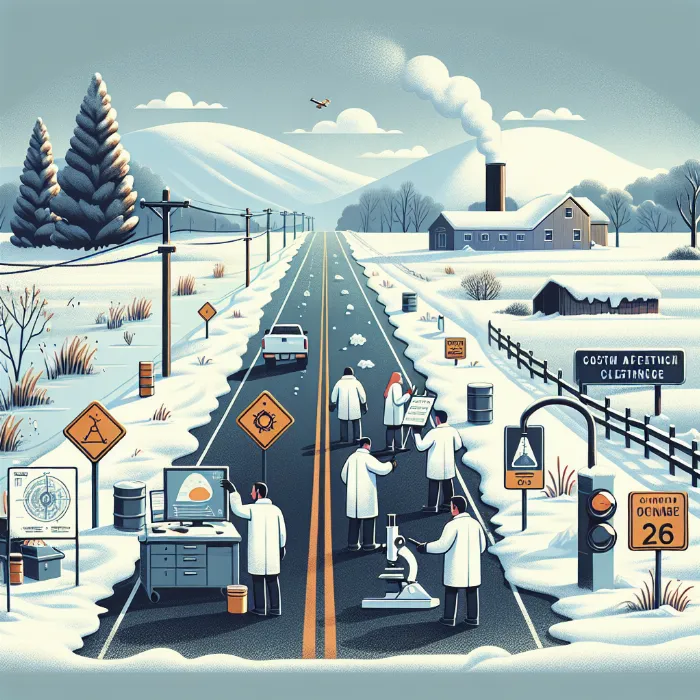
The grant supports an applied research program that will deploy and monitor several types of winter maintenance treatments on road sections selected in Missouri and nearby climates. According to reporting on the award, the university plans to assess:
- Operational effectiveness for snow and ice control, including reductions in crash risk and improvements in pavement friction;
- Material and infrastructure impacts, such as chloride-driven corrosion of bridges and vehicles and degradation of pavement materials;
- Environmental effects, notably chloride concentrations in roadside soils and surface waters, and impacts on vegetation and aquatic life;
- Cost and lifecycle considerations that include material costs, application frequency, and ancillary costs such as accelerated maintenance and bridge repairs.
The grant will fund both field-scale trials—where different deicing compounds and application rates are applied under controlled conditions—and laboratory analyses of collected samples. Teams of engineers and environmental scientists are expected to work with state and local transportation partners to place instrumentation and monitoring equipment on active roadways.
Context: why research on winter road treatments matters
Winter maintenance is a safety-critical activity for transportation agencies in cold climates. Deicing agents and abrasives are applied to reduce ice formation and increase traction, and they have contributed to reductions in wintertime crashes over decades. At the same time, the materials commonly used for winter maintenance carry costs beyond the material purchase price.
Common treatments
- Rock salt (sodium chloride): Widely used because it is inexpensive and effective at moderate subzero temperatures.
- Calcium chloride and magnesium chloride: More effective at lower temperatures and often used in brine form.
- Liquid brines and pre-wetting: Solutions applied before or during storms to prevent bonding of ice and snow to pavement.
- Alternative additives: Organic additives such as sugar-beet co-products or other agricultural byproducts are increasingly used as anti-icing additions to brine to depress freezing point and adhere to pavement.
- Abrasives: Sand and other abrasives are applied to increase traction, especially where chemical deicers are less effective.
Known trade-offs
Although deicers improve roadway safety, research and agency reports have documented trade-offs:
- Corrosion: Chloride salts accelerate rust and corrosion on bridges, vehicles and roadside infrastructure, increasing maintenance and replacement costs.
- Environmental impacts: Chloride is persistent in freshwater systems and can raise salinity in streams, lakes and groundwater, which can harm aquatic life and affect drinking-water sources.
- Vegetation and soils: Salt spray and runoff can damage roadside vegetation and alter soil chemistry, reducing roadside habitat quality.
- Economic costs: Beyond the cost of materials, there are indirect costs related to corrosion, environmental remediation and potential impacts on water treatment.
Federal and state transportation agencies have prioritized research into methods that balance safety with reduced environmental and infrastructure impacts. The Federal Highway Administration (FHWA) maintains resources on winter operations and best practices, highlighting the need for treatment optimization and monitoring https://ops.fhwa.dot.gov/. The U.S. Environmental Protection Agency has also summarized concerns about highway deicers and surface-water quality https://www.epa.gov/nps/road-salt.
What Missouri S&T will measure
The research program is expected to include a mix of quantitative measures common to winter maintenance research. Typical metrics include:
- Pavement friction and pavement surface temperature data, collected by mobile friction testers and embedded sensors;
- Accident and traffic incident records near trial sites to detect short-term safety effects;
- Water-quality monitoring of roadside ditches, culverts and nearby streams for chloride, conductivity and related parameters;
- Corrosion monitoring using coupon tests (metal samples exposed to treated roads) and nondestructive evaluation of existing structures;
- Soil-sampling and vegetation assessments adjacent to treated road segments;
- Economics: unit costs of materials, application logistics, and an analysis of lifecycle costs including infrastructure deterioration.
Methodologically, the study will combine before-and-after comparisons at test sites, control sites where conventional treatments continue, and possibly paired-catchment designs for environmental monitoring. Results will be intended to inform state departments of transportation and municipal public works operations across similar climates.
Partners and stakeholders
Winter maintenance research typically involves partnerships between universities, state transportation agencies and private vendors. Such partnerships provide access to roadways for field trials, application equipment and operational expertise. Project stakeholders include:
- State departments of transportation and county road crews that supply operational know-how and host test sections;
- Private suppliers of deicing materials and application equipment;
- Environmental agencies and water-resource managers who monitor ecological impacts;
- Local communities and utilities that may be affected by changes in roadside salt loads.
Agencies often view university-led pilot programs as low-risk opportunities to test alternatives in realistic conditions. The exchange of technical expertise and data helps agencies refine specifications and procurement practices.
Precedents and comparable studies
Other states and research programs have tested alternative materials and application strategies. For example:
- Beet-sugar co-product trials: Departments of transportation in the upper Midwest and northeastern states have experimented with agricultural byproducts blended into brines to improve adhesion and lower freezing point. Minnesota and Wisconsin have public records of trials and guidelines on organic additives.
- Pre-wetting and anti-icing: Many agencies have adopted pre-wetting of salt or application of liquid brines before storm events to reduce total salt use while maintaining safety.
- Salt management programs: Comprehensive salt-management programs that combine materials, application timing, operator training and monitoring have reduced material use while maintaining safety.
Missouri S&T's program joins a growing body of applied field research aimed at providing data that agencies can use to update specifications and best practices. Agencies such as the Minnesota Department of Transportation have published results and guidance from multi-year trials of organic additives and application rate optimization https://www.dot.state.mn.us/.
Expert perspectives
Transportation and environmental specialists emphasize that research must be rigorous and site-specific.
'Evidence-based winter maintenance requires carefully designed field trials and comprehensive monitoring,' said a senior analyst at a federal transportation research program. 'What works in one region may not perform the same way elsewhere because temperature patterns, pavement types and available equipment differ.' Agencies have increasingly turned to collaborative university projects to fill knowledge gaps. The Federal Highway Administration supports such partnerships through guidance and funding programs https://ops.fhwa.dot.gov/.
Environmental scientists stress the need for water-quality monitoring as part of any deicing study. The U.S. Environmental Protection Agency notes that salt can be persistent and affect freshwater systems and municipal water supplies, and encourages state-level monitoring and management plans https://www.epa.gov/nps/road-salt.
Data, transparency and public reporting
To be useful to transportation agencies, pilot studies must be transparent about methods, instrumentation and raw data. University-led projects commonly provide:
- Open technical reports describing experimental design, instrumentation and QA/QC procedures;
- Summaries of environmental monitoring with time-series plots of chloride and conductivity;
- Operational cost estimates and sensitivity analyses under different application scenarios;
- Recommendations for agencies regarding specification language, application equipment and monitoring needs.
Missouri S&T has a record of publishing technical reports and peer-reviewed papers arising from applied transportation projects, and the current grant is expected to produce final reports and datasets that can be reviewed by practitioners.
Potential impacts for Missouri and beyond
If the research demonstrates that alternative treatments or optimized application practices reduce environmental loading and infrastructure damage without compromising safety, state and local road agencies could revise specifications and purchase practices to save money and reduce ecological impacts. Potential outcomes include:
- Lower aggregate chloride loading to roadside ecosystems;
- Extended service life for bridges and roadside hardware through reduced corrosion rates;
- Reduced material use and costs through optimized application timing and rates;
- Improved guidance for municipalities that manage small fleets with limited budgets and training resources.
Conversely, if certain alternatives show no clear advantage or introduce new problems—such as increased biological oxygen demand in receiving waters—agencies will have data to avoid costly scale-up of ineffective treatments.
Challenges and limitations
Field trials of winter treatments face several practical and scientific challenges:
- Weather variability: Storm intensity, wind and temperature swings can make multi-year trials necessary to capture a representative range of conditions.
- Site heterogeneity: Pavement type, road geometry and nearby land use affect runoff and monitoring results.
- Logistics: Coordinating trials on active roads requires agency buy-in, safety planning and community communication.
- Long-term effects: Some environmental impacts—such as groundwater salinization—may take years to detect and quantify.
Researchers typically design studies with replication, control sites and careful statistical analysis to account for these issues. Findings are usually presented with caveats and recommendations for further study where results are uncertain.
Where to follow the work
Missouri S&T and partner agencies are expected to post project updates, technical reports and data as the research progresses. The initial news item reporting the grant can be found at the local news outlet that covered the announcement https://krcgtv.com/news/local/missouri-university-of-science-and-technology-receive-grant-to-test-winter-road-treatments, and general resources on winter operations are available through federal and state transportation websites:
What success will look like
Project success will be measured on multiple dimensions:
- Technical robustness: well-documented experimental methods and data collection;
- Actionable findings: clear recommendations for agencies regarding materials, application rates and monitoring;
- Cost-effectiveness: evidence that recommended practices produce life-cycle cost savings or equivalent safety at lower material or maintenance cost;
- Environmental benefit: measurable decreases in chloride loads to sensitive receiving waters or demonstrable reductions in roadside vegetation damage.
Even incremental improvements in application timing or reduction in material use can yield meaningful cost savings and environmental benefits when aggregated across a state or region.
Next steps and timeline
Missouri S&T's research team will begin by finalizing experimental sites, procuring instrumentation and coordinating with road-maintenance partners. Typical winter maintenance field programs span multiple winter seasons to capture a range of conditions; preliminary results and technical memos may be available after the first winter season, with final reports following multi-year analysis.
Conclusion
Missouri University of Science and Technology's grant-funded program to test winter road treatments responds to a practical need: balancing the imperative of roadway safety with concerns about infrastructure degradation and environmental impacts. By conducting controlled field trials, implementing comprehensive monitoring and engaging transportation practitioners, the project aims to produce the kind of evidence agencies need to make operational changes. The ultimate value of the work will depend on rigorous methods, transparent reporting and the willingness of agencies to adapt procurement and application practices based on the findings.
Disclaimer: This article is based on publicly available information and does not represent investment or legal advice.















Comments 0